

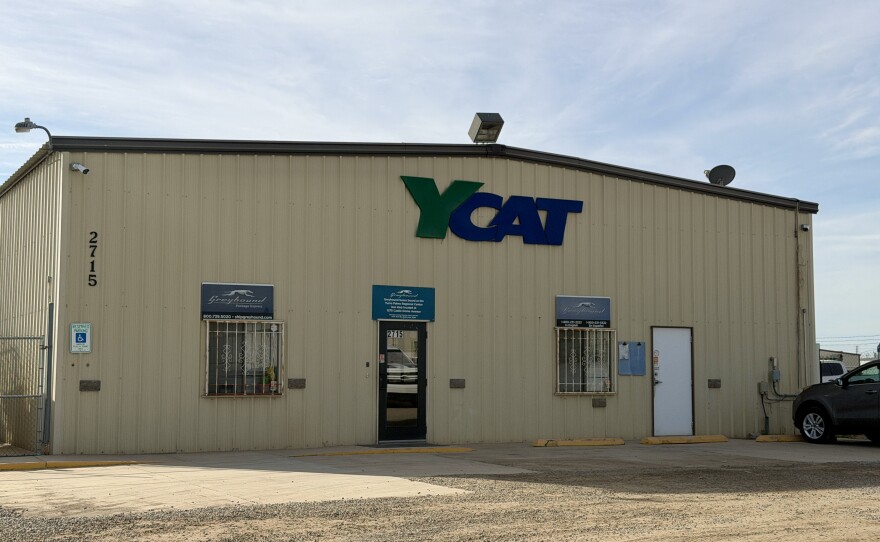
Over the past four years, the Yuma County Intergovernmental Public Transportation Authority, which operates YCAT, Yuma County’s public transportation system, has returned nearly $12 million dollars in federal funding to the state after falling short of required local matching funds.
Federal transit dollars require a dollar-for-dollar match from local governments, money YCIPTA has not had.
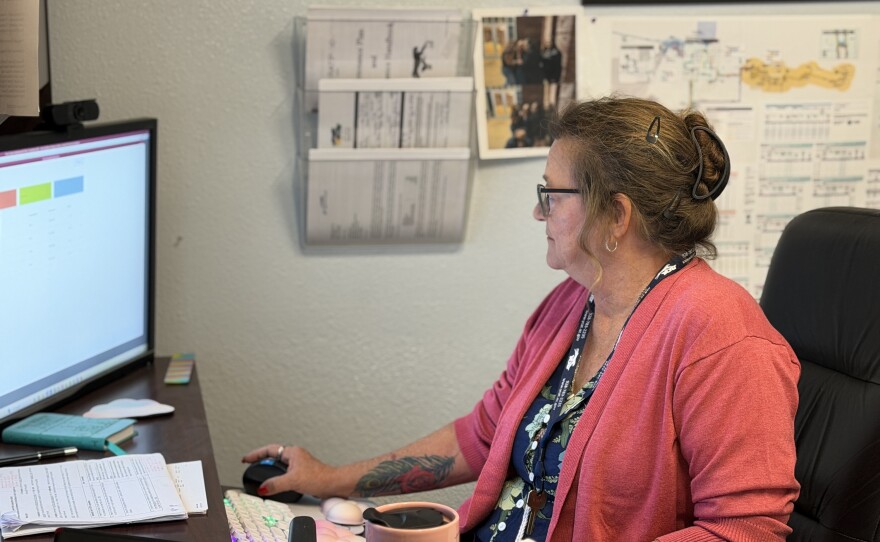
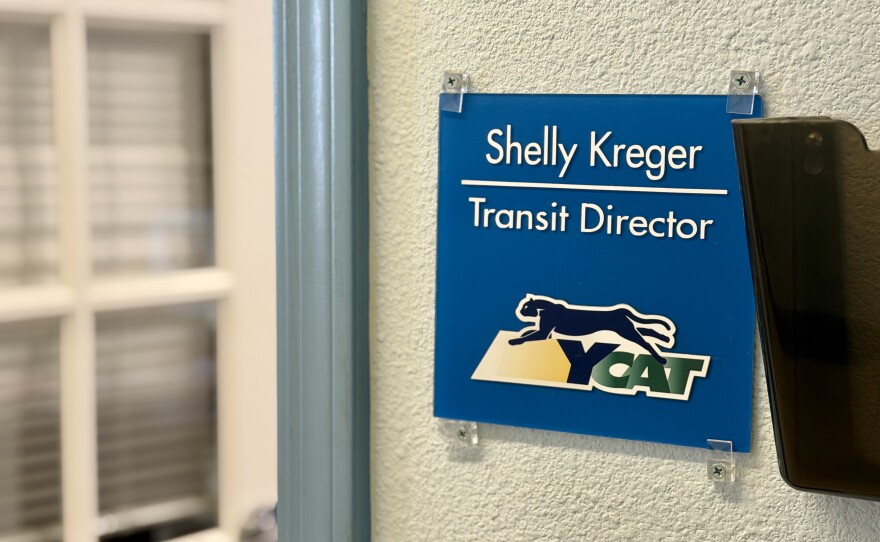
In recent months, YCIPTA Director Shelly Kreger, has been presenting to cities and towns across the county, sharing updates on ridership numbers and the agency’s operating budget.
“We always want to grow, we want to do more, but without the local funding to match our federal grants we can't expand,” she said.
Kreger has been the transit director since 2014, but her path into public transportation did not begin in an office. She started behind the wheel.
“I was a school bus driver over in California, my kids needed a ride to school and we didn't have a bus driver, so I became a bus driver."
Eventually she moved into administrative roles, working in finance and as a grant writer before eventually becoming director at YCIPTA.
“I just love public transportation, what it does for the community, what it does for a lot of people who don't have access to transportation of their own,” she said.
Kreger said she would like to expand service, but to do that YCAT needs more local funding to fully use available federal dollars.
“We have to have a match and usually that’s dollar for dollar for operating so for every dollar in federal funds we need a dollar of local match to spend. Our annual budget is $6.6 million so pretty much all of that is a 50/50 split so we need a good $3 million in local funds in order to use the federal funds so when we don't have enough to use when we don't have enough to use that entire years portion then we have to return what we can't use and it goes back into the state for the state pool for transit and other organizations in the state can use it for their transportation agencies.”
Their funding comes from three main sources, Federal Transit Administration grants, local revenue and in-kind contributions.
For fiscal year 2026, YCAT received a three percent increase in local funding from its partners, including cities and towns across Yuma County, Arizona Western College and the two tribes in the area.
That brings total local funding to about $1.1 million, roughly $30,000 more than last year.
Kreger said they’re grateful for the increase, but it does not keep up with rising costs.
“Running our service goes up 5% so 5% of $6 million is not $30,000.”
YCAT’s operating costs this year are estimated at $6.6 million. Total revenue from all sources is expected to be around $7 million, leaving little room to expand services.
More than 400,000 people ride YCAT buses each year. About 240,000 of those riders use the Yellow Route.
“The yellow route transports people from San Luis to Yuma,” said Kreger.
It is the highest performing route, connecting South County to the city of Yuma and the rest of the county.
The Yellow Route alone costs about $3.2 million a year to operate. The City of San Luis contributes about 140,000 dollars toward the service as part of their contribution dues.
To meet the federal matching requirement, YCAT would need about $1.6 million in local funding for the yellow route.
With the majority of riders for the route living in South County more funding from the City of San Luis would be ideal, however, that funding is not available, as the city has faced its own budget challenges.
“It’s tough for everybody and I get it you know so we’re just trying to do whatever we have to do and if we have to cut service later down the road, minimize it we will, hopefully we won't have to do it,” said Kreger.
During a December meeting, San Luis Mayor Nieves Reidel acknowledged the importance of the bus service.
“On behalf of the mayor and the council and the City of San Luis we highly appreciate it, we understand numbers, we understand the need,” said Reidel. “Unfortunately, we’re all in the same boat and we are all going through a crisis. It's sad and it would be catastrophic if we were to lose a service like this,” said Reidel.
Kreger said they’re looking for ways to increase revenue and avoid losing federal funding.
“That is 12 million dollars that could have gone right into our community. That money would give more service for people to reach a wider area. That's the one thing I would like them to understand and I'm sure if they had more money to contribute, I am sure that they would but again that's a lot of money that we are not putting back into our own community,” said Kreger.
Advertisements on buses and at bus shelters, which provide shade for riders, have become a strong funding source, according to YCIPTA numbers.
YCIPTA brought in about $440,000 from advertising sales last year, an increase of roughly $200,000 dollars compared to the year before.
Kreger said adding more bus shelters would create space for additional advertising, but the cost to build them has doubled.
“A bus shelter used to cost around $15,000, it's now $20,000 dollars plus $10,000 for installation,” she said.
She said businesses could play a major role by helping fund bus shelters at stops near their locations, which she believes would benefit both riders and businesses.
There are 260 bus stops across Yuma County, but only 22 have shaded bus shelters.
At a recent meeting council members with the City of Yuma questioned why there aren't more bus shelters, especially during the hotter months. Kreger said YCIPTA was doing what it can to add more shelters.
YCIPTA is also looking ahead to a public transportation hub planned for Yuma’s historic Hotel Del Sol. Kreger said the hub would give riders a cool place to wait and provide a space to sell tickets. However, there hasn't been any progress on the project.
YCAT currently operates eight fixed bus routes. Even with limited funding, Kreger said they remain committed to expanding access to public transportation when possible.
