


In the U.S., school choice isn’t just about families picking whichever schools they’d like — although that is the goal. It refers to a policy framework that allows public funds to follow students to the schools or services they feel best fit their needs. And frameworks vary state to state.
Arizona, however, is considered the nation’s leader in school choice due to its universal school voucher program. The state was the first to expand eligibility to any and all K-12 students in 2022.
Since then, more families have taken advantage of the program, using Empowerment Scholarship Account funds and choosing between charter, private or home schooling, among other options.
Desert View Academy, which recently received a visit from Arizona Schools Chief Tom Horne, is one such school families might pick in Yuma, and many do.
“That's a great question because all schools teach reading, all schools teach writing, all schools teach math, so that is something that is embedded to all education institutions. In addition, I am a strong advocate that there are great teachers in all the schools here in Yuma,” said DVA Principal Analisa Angulo. “However, I love Desert View. It is my school of choice. My girls came here, and I think a good indicator of a great school is that the educators that teach here, their kids come here, and I think that shows that Desert View prioritizes not only academics, but the student as a whole.”
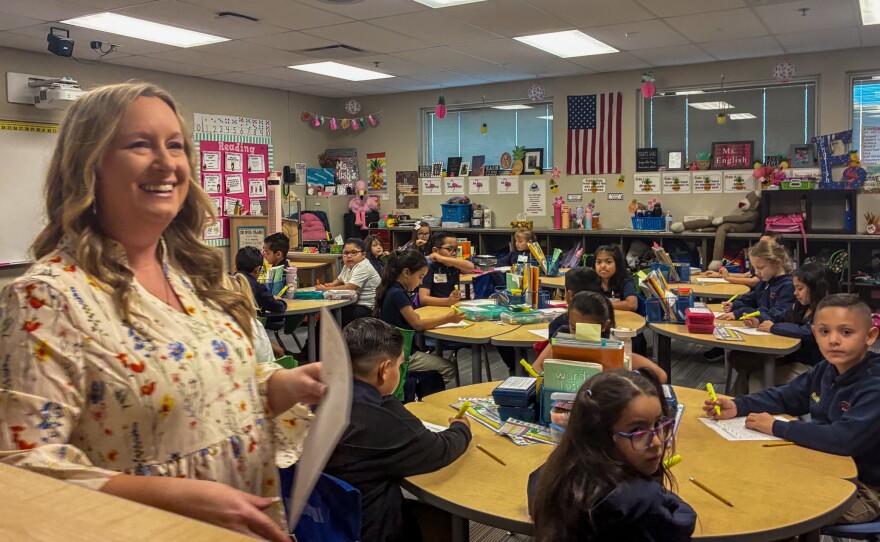
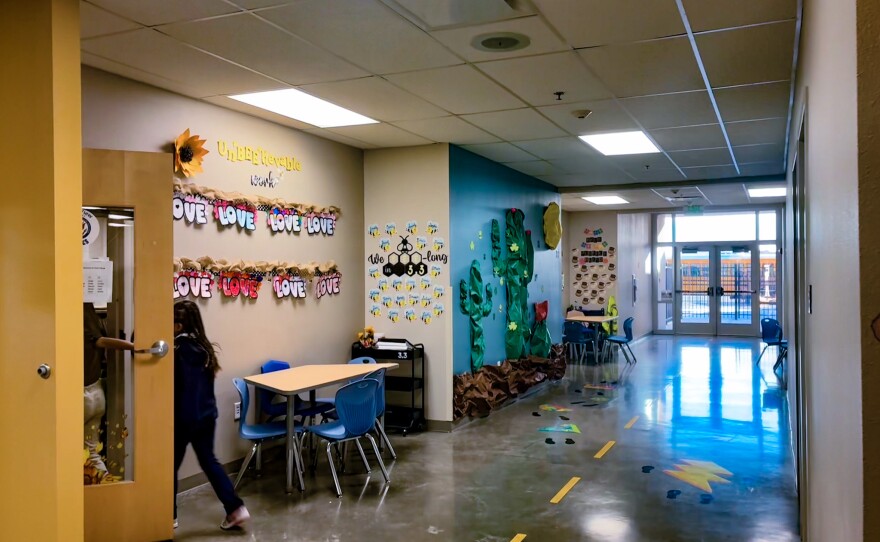
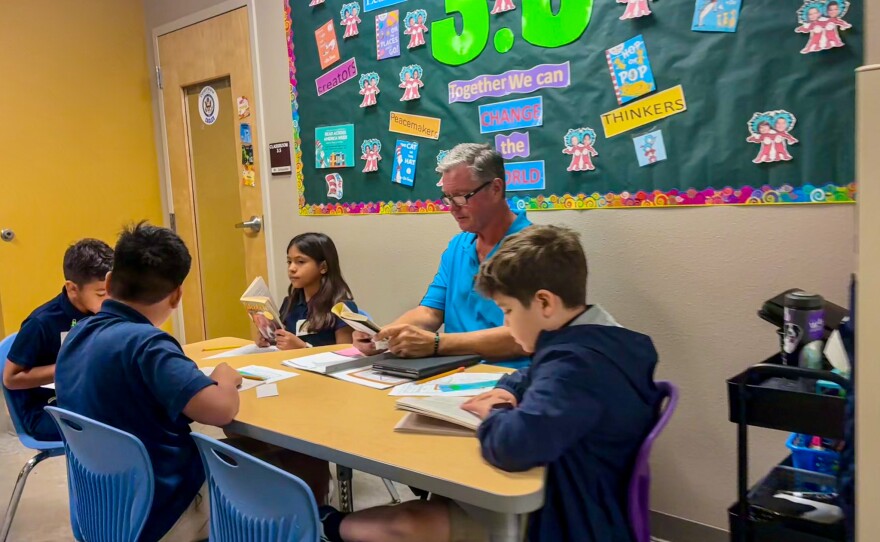
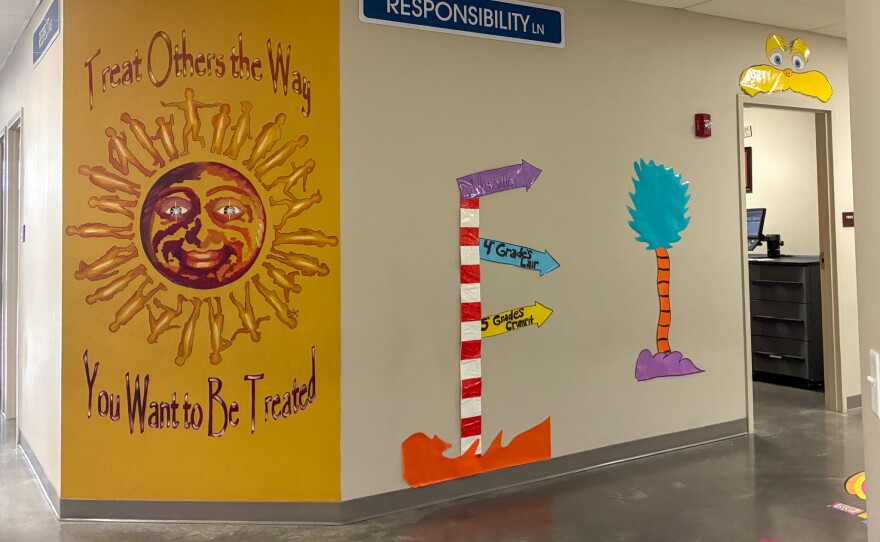
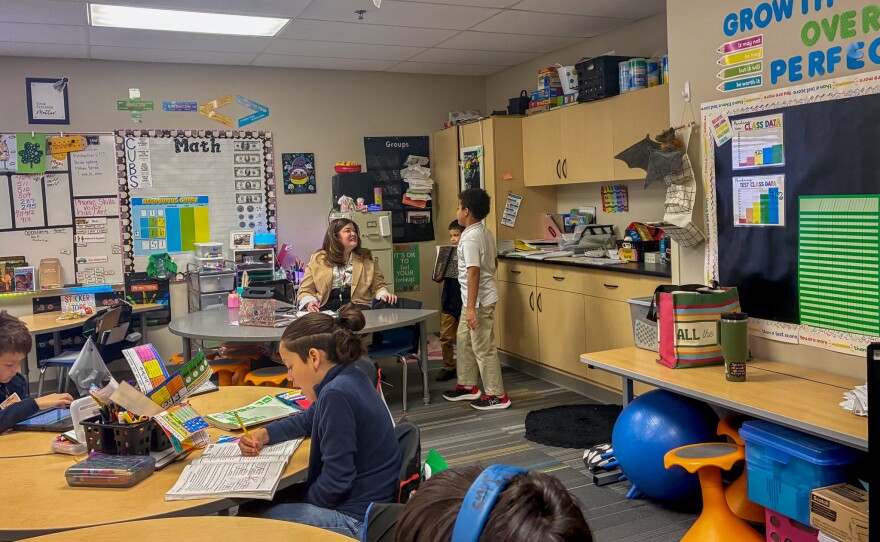
As a K-5 school, Angulo stated that DVA focuses on providing children with solid foundations.
“The importance of education starts in elementary,” she said. “They got to love it because they're going to do things that are hard in school, and they're going to be given tasks that they don't want to do, but they got to still do it to the best of their ability. They have to have the grit to finish it. And that's key because they need that when they're older.”
Angulo actually began her education career at Desert View, and she never really left. That’s why she believes school choice is just as important for educators.
“I choose to be here. I choose to make this my career. My girls — my two girls — started at Desert View and ended at Desert View,” she said. “You can speak to all the parents here on campus. They value it in their career, but they value it as a parent. So it's great that those teachers entrust their peers to help educate their children because they themselves see the value in education.”
For some educators, school choice is about investing in a campus community. For others, it’s about expanding families’ control over where and how their children learn.
“I am a product of the public school system, and I'm a staunch believer in parents having a choice to send their kids to school wherever they think is best for their school. Not every child is a good fit for public school, and some children do need that little extra help,” said Deborah Guerrero, principal of Southwestern Christian School. “My children all went to public school, but having the opportunity to choose where your child can go to school and having much more say than just your local home community school, I think, is really important for parents.”
She also noted it’s “kind of nice” to have a little more control over where one’s tax dollars go, too.
Each year for National School Choice Week in January, Southwestern holds a special celebration in their chapel where families and alumni speak on why school choice matters to them.
“The thing that they talked about the most was the relationships that they built with their teachers, that in public school, they do their best to build relationships with teachers,” Guerrero recalled from this year’s celebration. “But here, because of who we are and how we can work with kids in a smaller environment, they were able to build on that and the teachers were able to really, truly get to know the student more than just a grade or, you know, another child in their class.”


Guerrero suggested that approach has been very helpful because kids “need to be heard, need to be seen.”
In addition to that, Southwestern’s style as a private school pairs academics with a Christian worldview. But it’s not just Bible study according to Guerrero.
“We're able to provide lots of opportunity. For instance, our eighth graders, they get to spend an entire week at Sea World — living at Sea World in the dorms, studying and doing classes and things like that in biology and all the other sciences,” she said. “My kids never had that opportunity in public school and it makes me sad. I wish all of our kids could do that.”
As she summed it up, Southwestern’s appeal is a combination of extra learning opportunities and a Christian education.
Kyla Giroux, who attended Southwestern and now works as an administrative assistant, shared that faith was the reason she chose the school when she moved to Arizona in 2011.
“I know that's not the case for everybody, but for me specifically, it did greatly impact my faith — the Christian environment and being able to hear about Jesus and have weekly chapels and worship,” she said. “That really impacted me a lot, and I really do believe that carried me into where I am today.”
Today, outside of administration, Giroux is heavily involved in her church and has a ministry of her own.
“I'm a youth leader, so I spend a lot of time with teens and kind of pouring into the next generation,” she said. “At the time, when I was in junior high here, we had a junior high Bible study for the girls and the boys, and so that was kind of my first experience with that and getting to hear about that kind of stuff, and so that, that really kind of started it all for me, and now that's my life.”For Giroux, Southwestern’s academics are a plus.
“I think it's so beautiful that we can give our families in this state an option to have an environment for their education that's not just religious, but also that is rigorous and intense,” she said.
When parents send their kids to the school, however, she reminds them that studying at Southwestern isn’t easy.
“We’re happy to have you, but just as a reminder, we’re very intentional with who we let into the school because we want to set up our kids for success, and our curriculum is not easy,” she tells them. “It is fast paced. It is a challenge. And it does in a lot of ways prepare you for what is to come next.”Parochial or religious schools make up a significant portion of public school alternatives, but some schools are set up to focus on students who need help finishing their education.


In Yuma, Educational Opportunity Center Charter High School, or EOC Charter High School, primarily functions as a second chance school, helping kids earn their high school diplomas.
“We are 16 to 21, so we're kind of a recapture school,” said Amber Cygan, who wears several administrative hats at EOC. “Some kids need to catch up. They end up graduating late. Some come and graduate early. Some just need the smaller environment and a little bit more support.”
Smaller classrooms are typically what draws families to EOC Charter High, she noted, because they enable closer relationships between staff and students.
“A lot of times we have generations and families, children of graduates that come here, brothers, sisters, cousins,” Cygan said. “But it's because it works, and so we end up having generations of families that graduate from here as well.”
That proximity has led to what she considers a very tight-knit community.
“We're family,” she said. “We're family, so there's a lot of things even that don't have to do with the school that they may come to talk to us about, and that's parents and guardians as well — grandparents, other siblings. We are family, and so we provide support beyond just education.”
Len Campos, a senior at EOC, testified to that in her interview with KAWC. She recounted that she first came to the high school never having liked school. Her prior experience was lacking in support and kindness, which she said haunted her.
“My sister actually dragged me here the first time, but I backed out with fear, and I was super scared because I was not at the right mental space,” she said. “But I understood that if I want to get that life that I so dreamed of, then I need to do this.”
Although she showed up with little confidence, she set small goals for herself.
“I thought it was going to be horrible. I thought everyone was going to be rude, quiet, or the teachers, especially the teachers — but they completely turned my world around,” she said. “The students are very sweet, and they're polite. I met my friends here, and how the teachers teach — oh, gosh. If I can tell you how the teachers teach! They are so sweet.”
Like many EOC students, Campos has benefitted from the opportunity to recover credits and access programs like the Southwest Technical Education District of Yuma, where she’s participating in medical assisting.
For Campos, that support made the difference.
“They see more than just a student,” she said. “They see a person and they're willing to sacrifice to give you the future you deserve.”
Reporting for this article is supported by a grant from the Arizona Local News Foundation.


