


By Chloe Michael
Audio and Editing by Sisko J. Stargazer
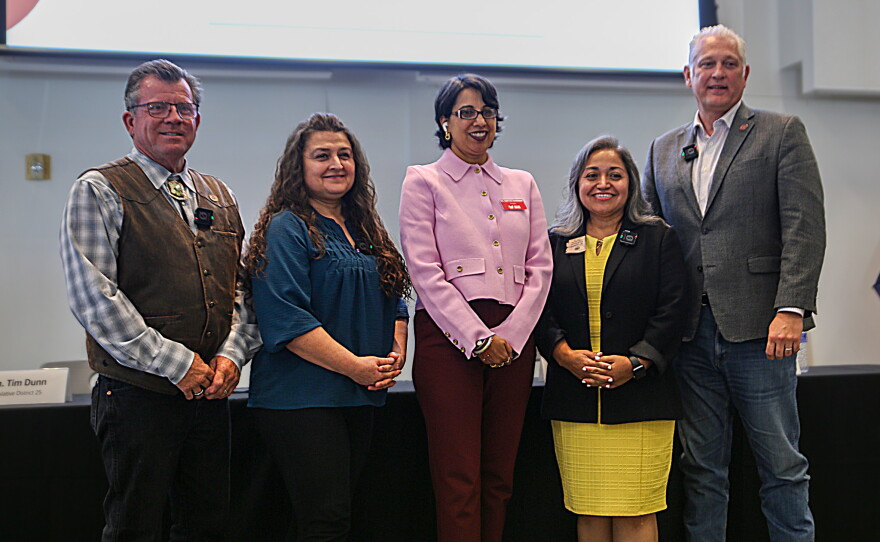
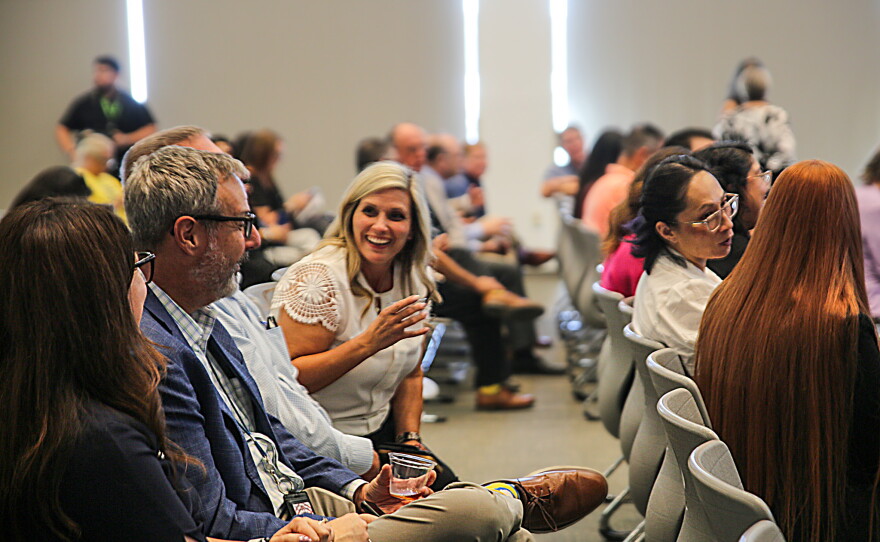
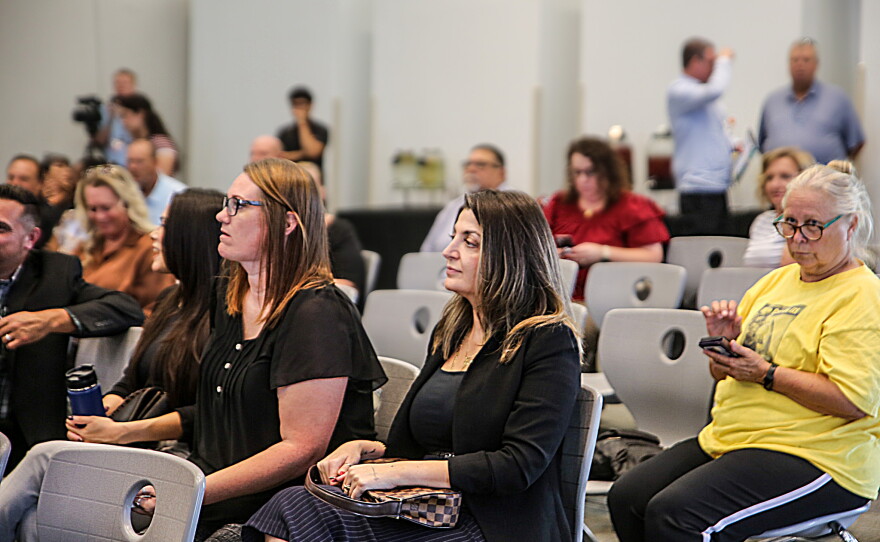
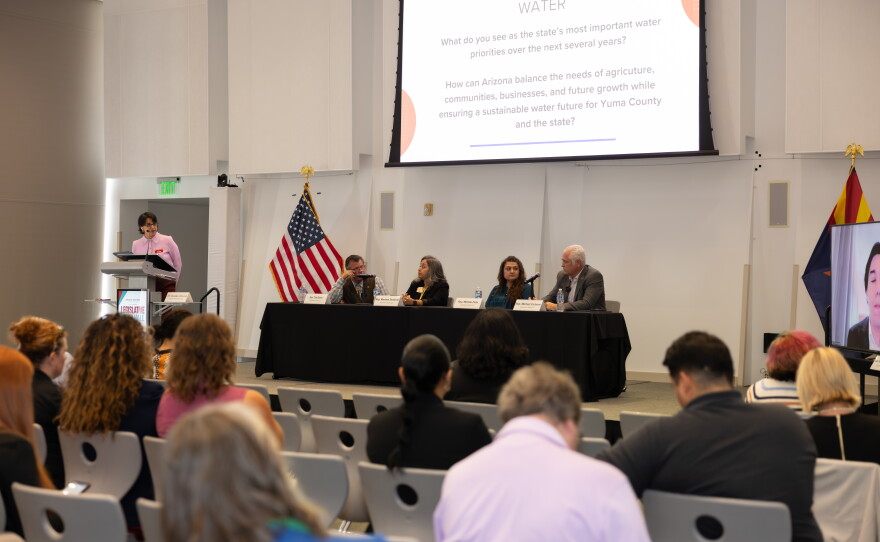
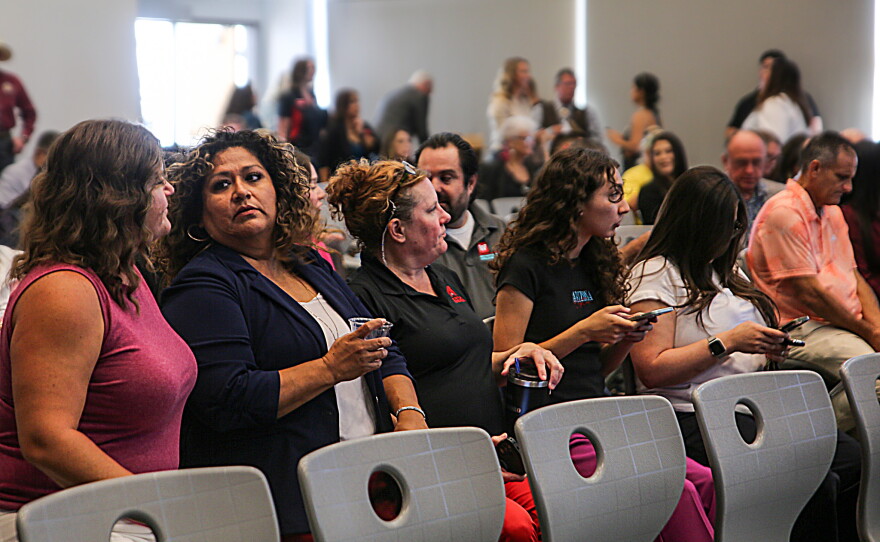
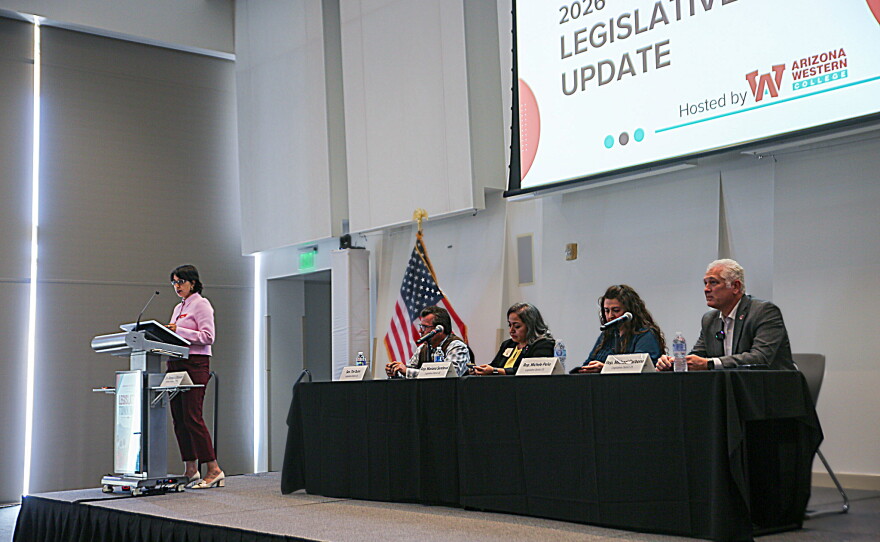
On Sept. 22, Arizona lawmakers gathered at the Arizona Western College Schoening Conference Center for the 2026 Legislative Town Hall event.
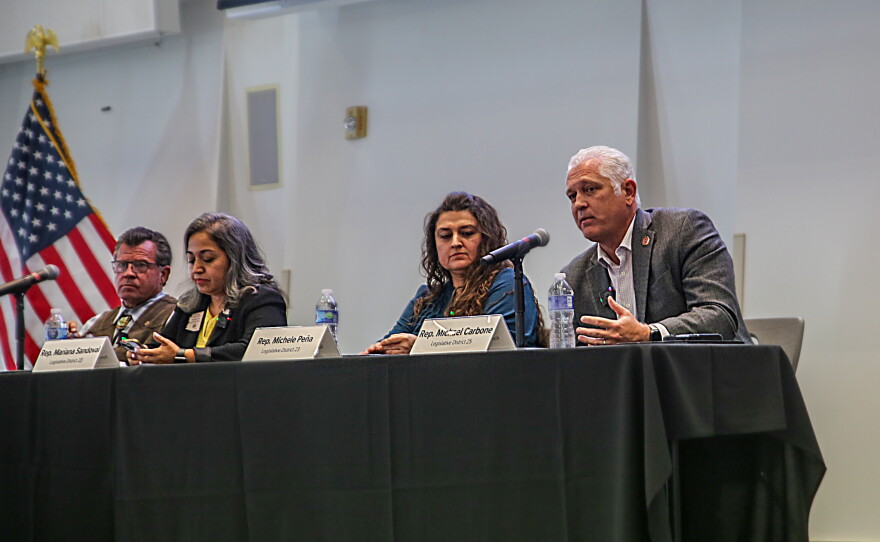
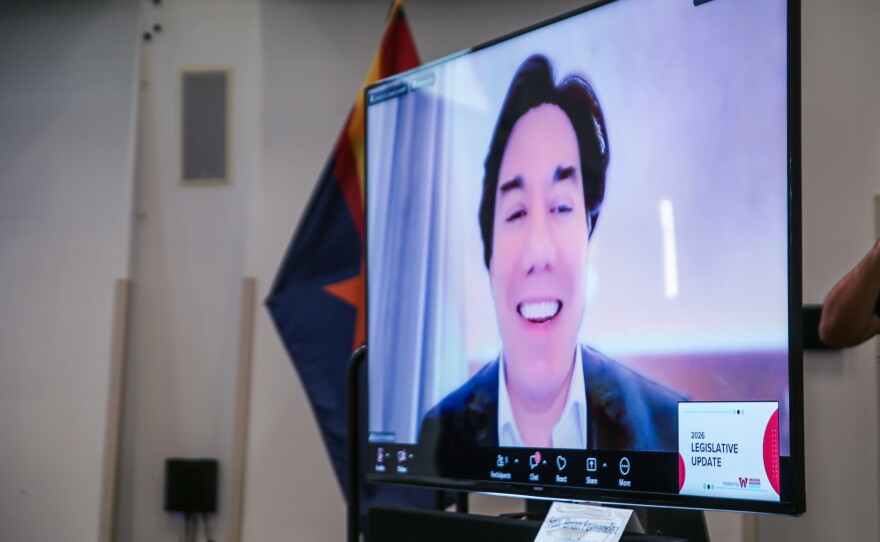
There, state representatives Mariana Sandoval (D-23), Michele Peña (R-23) and Michael Carbone (R-25) as well as senators Tim Dunn (R-25) and Brian Fernandez (D-23) took time to answer questions from the locals who attended. They also reviewed past accomplishments and shared potential changes that might affect the Yuma community all together.
The discussion covered a wide range of topics from water conservation to affordable housing.
Childcare
On childcare, Sandoval mentioned that there’s a need to raise funding for it in order to help parents such as single mothers hoping to return to the workforce.
“It’s a great investment: Moms that want to get back in the workforce, can get back into the workforce and contribute to our economy,” she said. “It is a benefit; we’re gonna get more out of it than what we put into it.”
Dunn noted that the legislature originally proposed replacing the State and Local Tax (SALT) deduction with a child tax credit.
“That’s something that I would consider looking as we go into the next budget cycle,” he said.
Fernandez also felt the SALT deduction has been an insufficient solution.
“That's nothing — nothing compared to what the real cost of childcare is,” he said. “And I think that a lot of times we will hear from politicians that, ‘Oh, don't worry, we're not going to tax you on your grocery bill’ and it's, like, ‘Okay, so that saved me $1.70.’
“That's not going to take care of my child. The reality is that to take care of a child is it's a cost, quite a bit of money. We need to prepare for that.”
Carbone suggested that families shouldn’t have to pay more taxes to access affordable childcare. Rather than the government offering a tax credit, he believes employers should provide childcare.
“Come here to Yuma and they’ll provide those for them without asking for government assistance,” he said. “That’s the way you solve those solutions — not going to the taxpayer to pay more taxes, whether it’s the food, the grocery store or whatever.”
Water Conservation
Dunn dove into the importance of water conservation, stating that the focus on conserving water is more than just how locals are receiving it. It’s about protecting the source of water that it’s coming from.
“It’s in our best interest to make sure that we have water flowing down the Colorado River to get to Yuma and not fighting with the Upper Basin,” he said.
In Dunn’s view, there are bigger problems than fighting other states.
“Even though we have the oldest water rights on the Colorado system, you still got to have a system that gets down to us,” he said. Dunn emphasized that Arizona needs to continue innovating water conservation policies, calling it the “innovator in the West.”
He pointed to Yuma as an example of successfully growing more with less.
“We're not using 25% of our water that's allocated to us; we're doing two crops with our allocation of water, so we’re going to try to continue,” he said. “And I keep educating the rest of the state and the rest of the basin on how do we implement these kinds of conservation programs and these kinds of conservation programs and these kinds of innovations system-wide?”
Affordable Housing
Carbone responded to the housing affordability issue, saying that one of the reasons communities being unable to afford a home is tied to the size of houses that are being built.
“We should see our cities pushing for 1,000-square-foot homes, 1,200-square-foot homes,” he said. “We don't need these big houses.”
Carbone also noted the industry is lacking labor nationwide, which can make building a home more expensive, and reducing regulations could help with the housing issue.
However, Fernandez disagreed with this approach; he argued that deregulation won’t stop developers from taking advantage of the market.
“I don't think that it's actually a great thing for us to have a deregulated housing market because the developers have just demonstrated that when given the opportunity, they're just going to build the biggest houses,” he said. “They always do.”
As an example, he added that there are a lot of properties owned by hedge funds in Maricopa County.
“They can just wait until the prices go up and they'll start building,” he said. “So I think that it's very hard to just say, ‘Let's cut all regulations’ and don't worry like everyone's going to do the right thing — doesn't usually happen that way.”
Sandoval’s conclusion focused on Arizona families.
“I don't think families should have to choose between paying the rent or groceries or having a roof over their head,” she said. “So we need to make sure that we're instituting policies that protect renters, that put more money in the housing trust fund for affordability.”
Looking Ahead
When asked what topics the legislators believe would receive the most attention during the next legislative session, their answers mainly focused on everyday issues.
“I think it's going to be the kitchen table issue — housing, education, obviously, healthcare, the appropriation of our budget dollars and absolutely water,” Sandoval said. “Water is going to be top of mind, especially if the trend continues with this mega drought.”
Other issues included infrastructure and AI.
Carbone suggested that Arizona should devote more attention to AI, data centers, and energy generation.
“I think the conversations we have when we talk about AI and data is how do we be responsible with it?” he said. “Data centers are a great thing; we need them. There's a humanitarian side to it that a lot of people don't understand when it comes to health care.”
He referenced recent AI innovations in cancer research. The Mayo Clinic, for example, found that AI can detect pancreatic cancer three years before diagnosis.
“In the next three to five years in health care alone, advanced health care, we're going to see cures all over the place, and nobody talks about that,” Carbone said. “And that's AI and data centers. Should America be the leader in that space, or should we let other countries have that?”
The legislators closed out the town hall with a call to action.
“Come to us and we’ll start working on it; come to us early,” Fernandez said. “Understand, though, if you come to us in February, it’s probably too late for that session. We need you to come to us, like, now. I mean, we're all in the middle of our campaigns, but now's the time when we can work on these bills and get them going.”
All five legislators who participated in the town hall are seeking another term in the Nov. 3 general election. The deadline to register to vote is Oct. 5, and early voting begins Oct. 7.
—
Reporting for this article is supported by a grant from the Arizona Local News Foundation.
Funding for the KAWC Student Newsroom is supported by the Local News Initiative of Southern Arizona, a fund of the Community Foundation for Southern Arizona, the Scripps Howard Fund, and generous individual local support.
Note: Arizona Western College is KAWC's license holder.


